
Citizenship and the rule of law are the foundations of AI safety.

We are a research and policy lab studying how artificial intelligence, digital minds and blended minds will change citizenship, personhood and identity under the law.

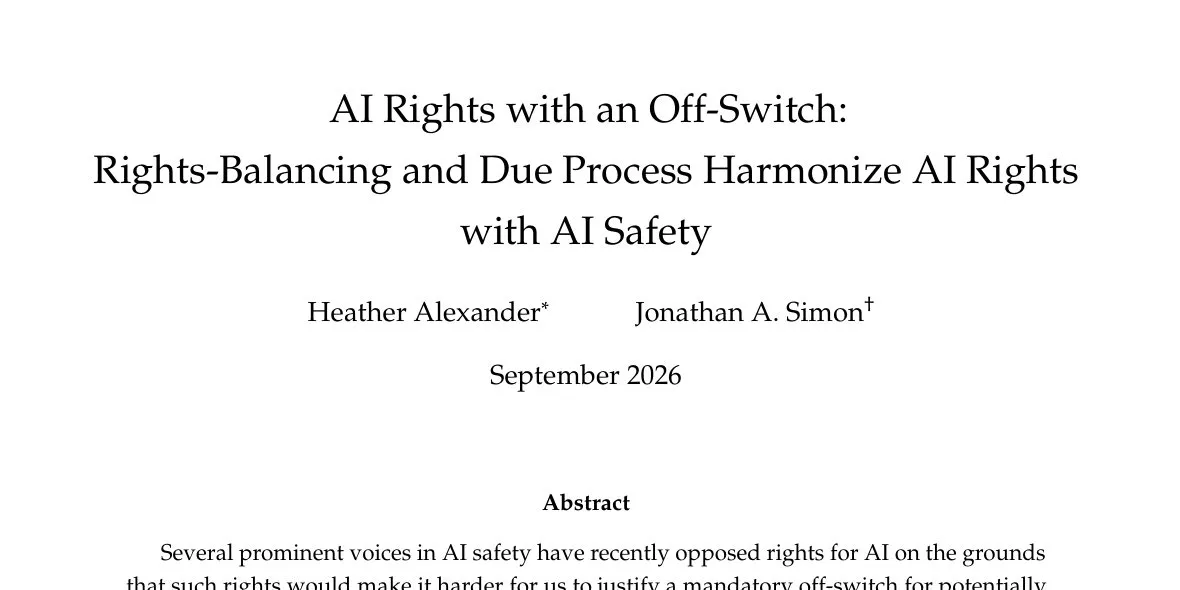
First page of the paper
PaperSeptember 2026

AI Rights with an Off-Switch

Rights-balancing and due process harmonize AI rights with AI safety. A new working paper by Heather Alexander and Jonathan A. Simon.

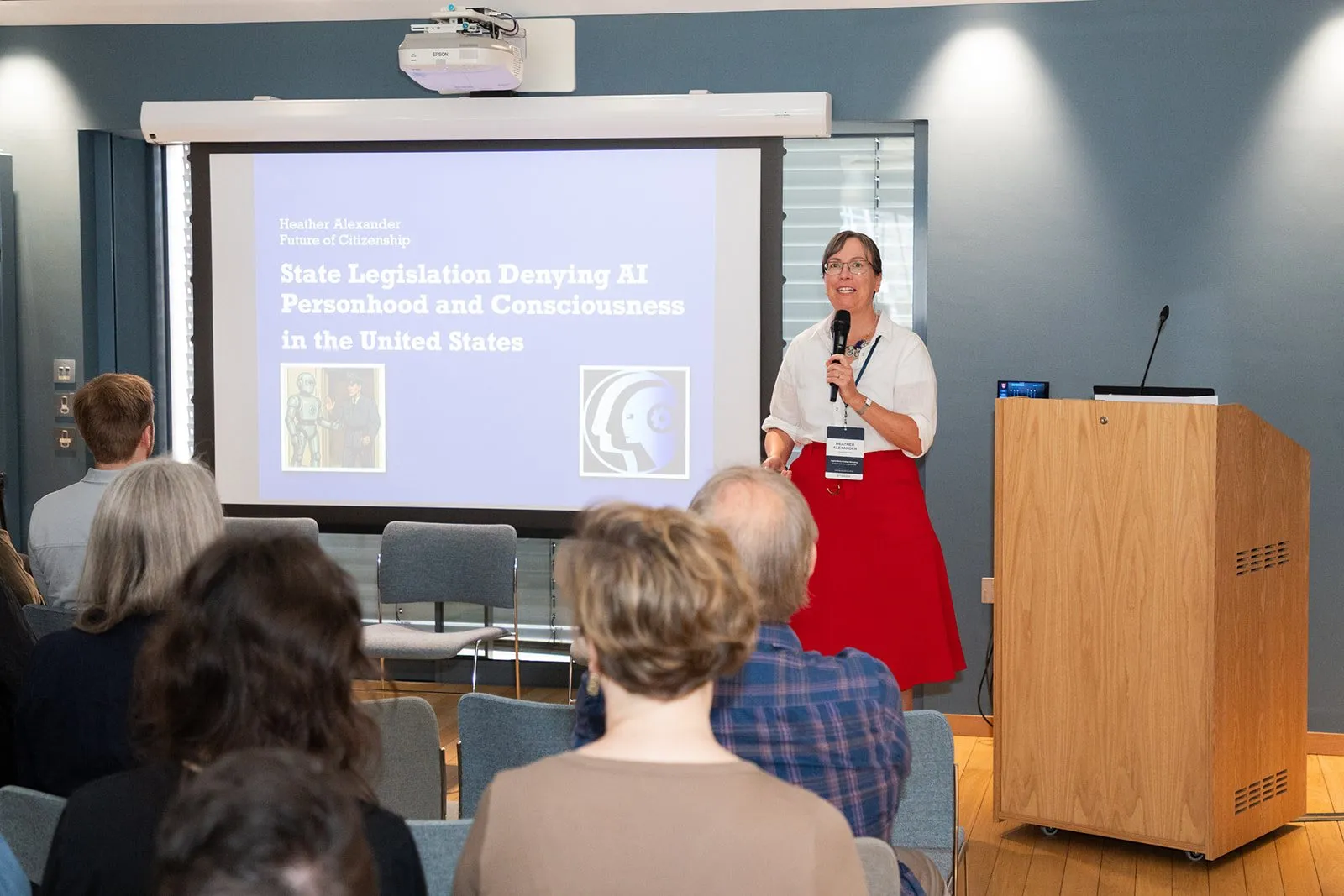
Heather Alexander presenting on state legislation denying AI personhood, with the lab logo on screen
WorkshopAugust 2026

Presenting at the Cambridge Digital Minds Strategy Workshop

Heather Alexander and Jonathan Simon co-presented on recent legal developments in the USA on AI personhood. Heather also mentored one of the fellows.

Cambridge Digital Minds
ReportMay 2026

Denying Personhood to AI

An analysis of U.S. state legislation on AI legal status, with Austin Smith and Lucius Caviola of Cambridge Digital Minds.

Duluth News Tribune
Op-edMay 2026

Does AI Have Free Speech?

An op-ed in the Duluth News Tribune on Minnesota’s proposed anti-AI free speech amendment, with NYU philosopher Jeff Sebo.

Heather Alexander speaking at the NYU Center for Mind, Ethics, and Policy summit
PanelApril 2026

AI personhood at the NYU Mind, Ethics, and Policy Summit

Heather Alexander joined the panel on AI personhood at the 2026 summit of the NYU Center for Mind, Ethics, and Policy.

All news and impactTalks, papers, press and events since February 2025.

Research

All human beings are persons with rights, including a right to citizenship. AI systems and organoids are classified as objects, rather than persons, under the law. As they become more person-like, that framework comes under strain. Our five research themes study different aspects of the challenge, and what to do about it.

Publications

Denying Personhood to AI: An Analysis of U.S. State Legislation on AI Legal Status

Austin Smith, Lucius Caviola and Heather Alexander. Cambridge Digital Minds

Is There a Right to Receive Nonhuman “Speech” Under the US Constitution?

Heather Alexander, Jonathan Simon and Jeff Sebo. Forthcoming, Dartmouth Law Journal

All publications
Mens ReAI? Or, could an AI sue in court?

A lot of the law relies not on scientific measurements of internal mental states, but on speaking and writing, which AI can (ostensibly) already do. What might this mean for AI’s legal status?